
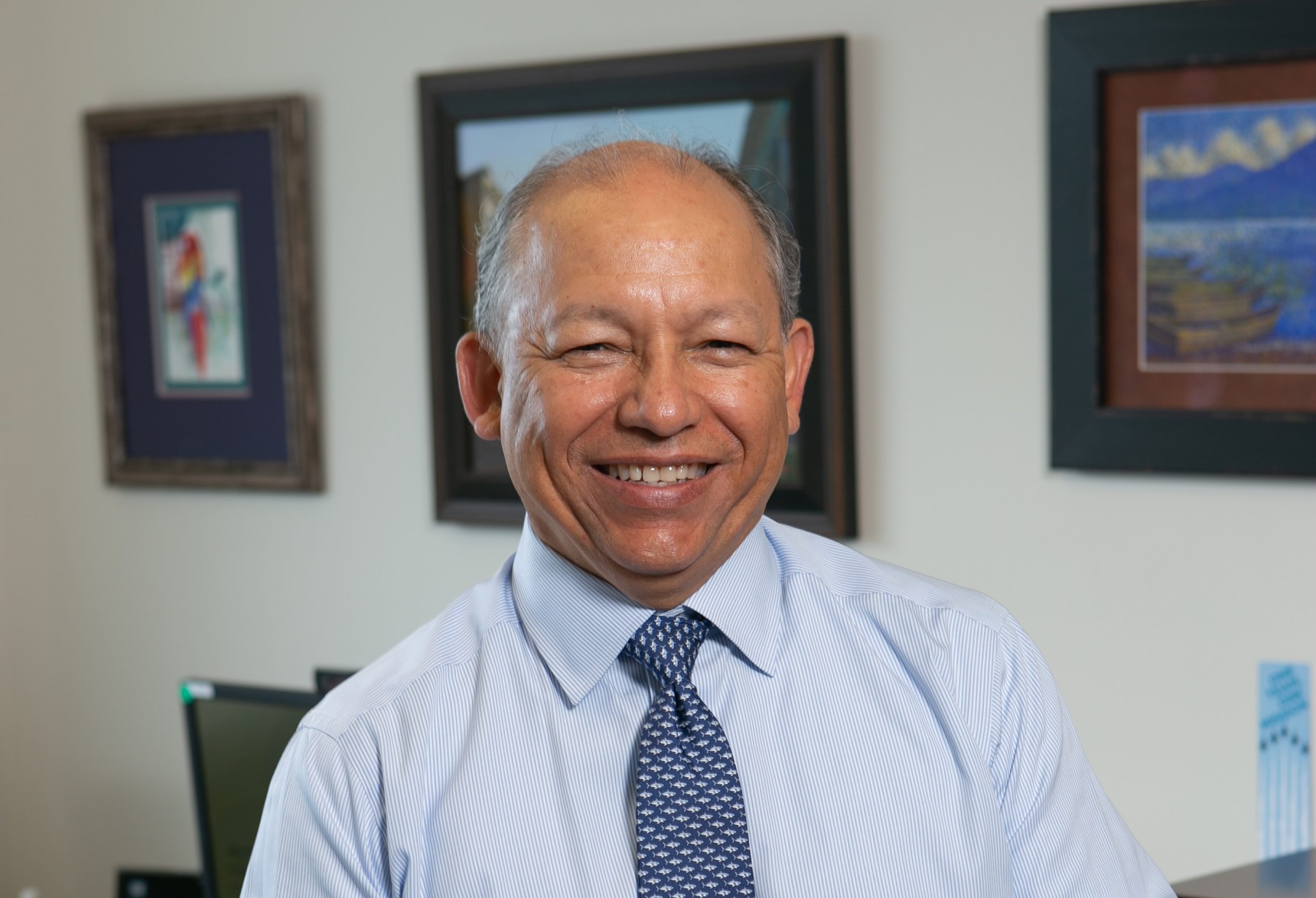
Sergio Melgar, who has served as CFO of Worcester, Mass.-based UMass Memorial Health for nearly 13 years, will retire in January. As he looks back on his time with the system, Mr. Melgar told Becker’s he’s confident he’s leaving it in a strong position.
“I feel really, really good,” he said. “The organization is in really great shape. Relatively speaking, the market that we’re in is very tough, very challenging, and we did finish 2026 very well with a lot of growth.”
While the audit for the 2026 fiscal year is not complete, Mr. Melgar expects UMass Memorial to post positive results, putting it in the “minority” of systems in the state. Revenue for the system came in just under $6 billion, with significantly more volume.
Looking back at his time with UMass Memorial, Mr. Melgar said things weren’t always running so smoothly.
When Mr. Melgar joined UMass Memorial, he said it was “conceivably the worst of times” for the system financially. The then roughly $2 billion system was losing $10 million a month, Moody’s had put it on credit watch, it was in technical default and nursing units were being closed.
Mr. Melgar and other system leaders went straight to work, making difficult decisions that involved “a lot of restructuring.” Some of that restructuring included a plan to lay off more than 600 people, or around 5% of the workforce at that time. The system was back in the black by that September, even though patient volume continued to decline.
“We became very efficient,” he said. “Management really stepped up and made some tough decisions. In 2015, when the volume returned, we were already a very lean, very productive organization.”
Following the financial turnaround, the system made another big bet: replacing its EHR with Epic.
“Even though in the aggregate we only had $500 million of liquid assets at the time, we made a $700 million commitment over 10 years — and not all at once — but over 10 years that we would go to Epic,” he said. “That was definitely going for the fences … that was an ‘epic’ decision.”
UMass Memorial Health went live with Epic in 2017. The move helped the system grow, and when COVID-19 hit in 2020, it was already a fully functional, integrated system.
“We were able to essentially grow during the COVID period when other systems lost a lot of volume,” he said. “We were actually growing, and we have continued to grow during that time frame … it absolutely has paid off.”
Mr. Melgar’s advice to Jeff Biesczat, who took over as UMass Memorial’s CFO in September, is to continue leaning on his teams and to stay out of the weeds. Mr. Melgar is serving in a supporting role to Mr. Biesczat until his retirement.
“You can’t make more than a few percent of the decisions that are being made around you, and you don’t want to be a roadblock in the process,” he said.
Mr. Melgar also cautioned that the healthcare industry is “probably as uncertain as it has ever been,” pointing to political and economic shifts and Medicare’s long-term funding problems.
Reflecting on his career in healthcare finance, Mr. Melgar said he would advise his younger self to learn how to prioritize.
“I have tried to instruct teams that if they have a list of 100 problems, they might as well have 1,000 problems, because you can’t deal with all of them,” he said. “Learn to prioritize. You can’t fight every battle.”
