
A new report from the U.S. Commission on Civil Rights reviews the civil rights foundation for language access, including federal laws, healthcare and education requirements, state and local policies, and the practical need for language services. The report, Language Access for Individuals with Limited English Proficiency, puts renewed attention on language access for people with limited English proficiency.
For healthcare organizations, the report is especially relevant because communication directly affects safety, quality, patient experience, compliance, and operational outcomes. The question for health systems is practical: can patients with limited English proficiency understand their care, communicate with their providers, and participate in decisions about their health?
The Healthcare Impact of Language Barriers
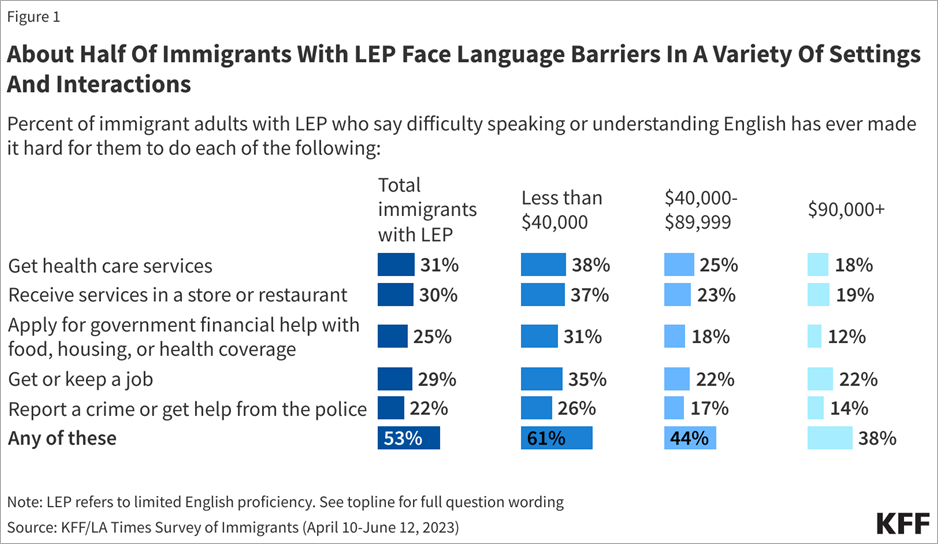
The report highlights a KFF and L.A. Times survey which found that 31% of LEP immigrants have had difficulty getting healthcare services because of difficulty speaking or understanding English, rising to 38% among low-income LEP immigrants.
Those challenges do not stop once patients seek care. Among LEP adults who used healthcare in the past three years:
- 48% reported at least one language-related barrier
- 34% had difficulty filling out forms for a doctor or healthcare provider
- 33% had difficulty communicating with office staff
- 30% had difficulty understanding instructions from a provider
- 27% had difficulty filling a prescription or understanding how to use it
- 25% had difficulty scheduling a medical appointment
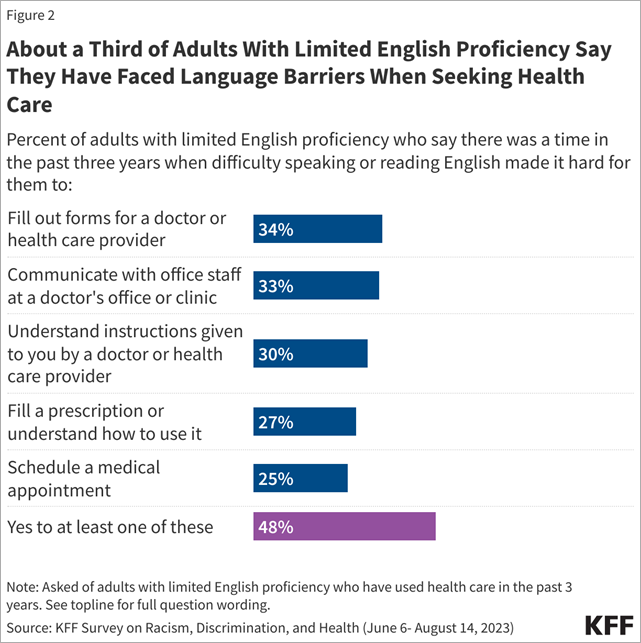
Together, these findings show how language barriers can move from access issues to care quality concerns, affecting communication, comprehension, and follow-through across the care journey.
The stakes can be significant. As the report notes, “in the most serious cases, a lack of qualified interpretation in medical settings can lead to long-term harm or death.” One study cited in the report found that hospitalized children with LEP parents were “twice as likely to experience harms due to medical care compared with children whose parents were English proficient.”
The impact also extends to operational performance. Professional interpreter access can help reduce readmissions and length of stay, resulting in “reduced hospital expenditures, even after accounting for the cost of interpreter services.”
The Access Gaps Healthcare Organizations Need to Address
The challenge for healthcare organizations is not only whether language services exist. It is whether patients and staff can reliably access them at the moments that matter. As the report states, language access “remains inconsistent across programs and communities,” which means meaningful access can still break down even when tools or services are technically available.
The report identifies practical challenges that can limit meaningful access in healthcare settings. These include:
- Limited awareness of language access requirements
- Inconsistent staff training on when and how to use language services
- Difficulty finding qualified interpreters and translators, especially for less commonly spoken languages
- Reliance on family members, children, or untrained bilingual staff
- Overreliance on machine translation or AI without clear quality controls
- Limited data on patient language needs and service use
Turning Guidance into Action
The USCCR report includes both formal best practices and broader recommendations for improving language access:
Understand Your Patient Population and Language Mix
Healthcare organizations need a clear view of the languages patients use, how often those needs appear, and where communication barriers are most likely to affect care. Strong language data helps teams plan interpreter coverage, prioritize translated materials, and identify gaps across the patient journey.
Train Staff on Language Access Requirements and Workflows
Staff should receive regular training on language access requirements, available services, and how to use them. In healthcare, that means teams know how to identify language needs, access interpreter services, document preferences, and avoid inappropriate informal support.
Use Qualified Language Support in Clinical Encounters
Qualified interpreters and translators are essential when accuracy, privacy, and terminology matter. The report identifies “the use of untrained interpreters, including family members or children” as a recurring challenge in language access. In clinical settings, that risk is especially important because medical conversations often involve symptoms, diagnoses, treatment decisions, medications, and consent.
Use a Two-Step Review Process for Translations
Translated materials should go through a two-step review process, with stakeholder review or proofreading by a second translator to ensure accuracy and appropriateness. This matters for patient-facing materials such as consent forms, discharge instructions, medication guidance, patient rights notices, appointment information, and financial assistance materials.
Apply Human Review to AI and Machine Translation
Machine translation and AI can support language access, but quality assurance is essential. Human review is especially important for clinical, technical, or rights-related information where accuracy is essential to meaningful access.
Review Language Services Over Time
Language access needs change as patient populations, service lines, and care settings evolve. Regular review helps organizations assess whether interpreter services, translated materials, staff workflows, and documentation practices are working as intended.
A Clearer Standard for Language Access
The USCCR report makes a broad case for language access as both a civil rights issue and a practical requirement for organizations serving people with limited English proficiency. For healthcare leaders, it’s a reminder to understand the requirements, review current practices, and strengthen the systems that make language access reliable in everyday care.
About the Authors:
Dr. Tatiana Cestari is the Director of Language Service Advocacy at Martti by Equiti, where she leads initiatives to integrate equitable communication into clinical and operational excellence. Equiti partners with healthcare organizations nationwide to strengthen compliance, safety, and patient engagement through language access innovation.
Dr. Bill Rivers chairs the National Coalition for Language Access and the SAFE-AI TF. A national leader in advocacy for language access, he brings more than 25 years’ experience in language access and more than 35 years’ experience in the language industry. He is a former Russian<>English interpreter and translator and has held numerous national leadership positions.
End Notes / References
U.S. Commission on Civil Rights. Language Access for Individuals with Limited English Proficiency. May 18, 2026.
Rao A, Pillai D, Artiga S, Hamel L, Schumacher S, Kearney A, Presiado M. Five Key Facts About Immigrants with Limited English Proficiency. KFF. March 14, 2024.
Gonzalez-Barrera A, Hamel L, Artiga S, Presiado M. Language Barriers in Health Care: Findings from the KFF Survey on Racism, Discrimination, and Health. KFF. May 16, 2024.
Becker’s 3rd Annual Fall Chief Pharmacy Officer Summit is the top tier event that the people leading the future of pharmacy convene. This 3-day event is built specifically for Chief Pharmacy Officers and senior pharmacy leaders. The sessions examine the workforce, financial and clinical priorities shaping pharmacy today. Becker’s is where candid discussions flourish and new ideas thrive. Becker's 3rd Annual Fall Chief Pharmacy Officer Summit
