
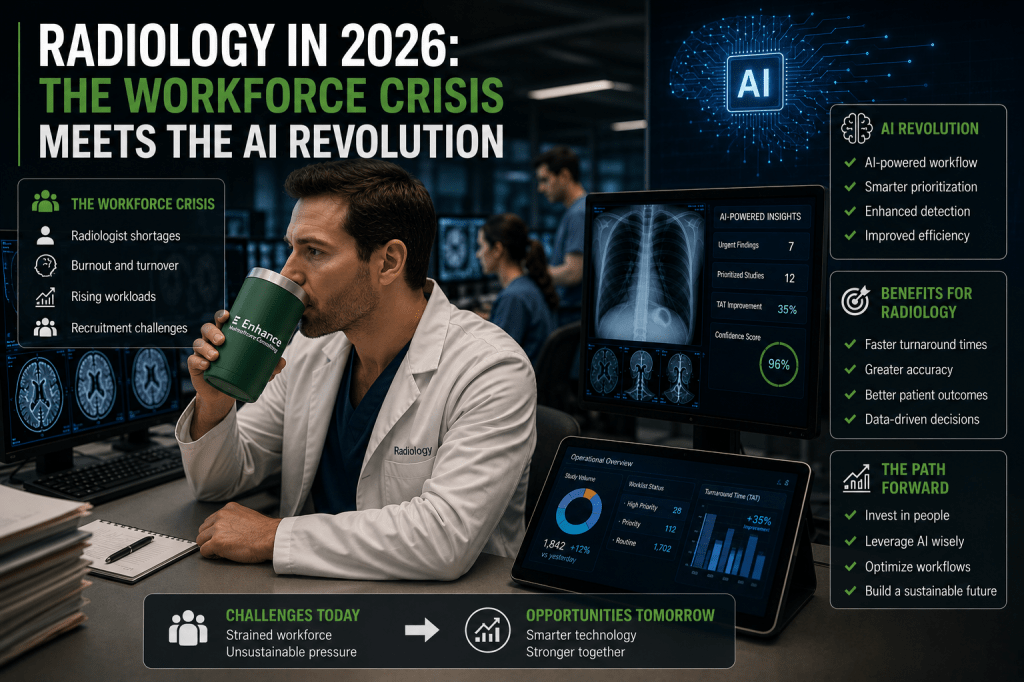
In 2026, Radiology finds itself at a pivotal inflection point. Imaging volumes continue to rise across hospitals, ER’s and outpatient centers, yet many organizations are struggling to maintain operational stability and financial performance. While the specialty has historically adapted well to technological and regulatory disruption, two issues now stand above the rest: workforce shortages and reimbursement compression amid accelerating AI adoption.
The first challenge is the growing shortage of radiologists and imaging professionals. Demand for imaging services continues to expand due to aging populations, increased utilization of advanced imaging, broader screening programs, and the ongoing shift toward data-driven diagnostics. However, staffing levels have not kept pace with this growth.
Radiology groups nationwide are reporting difficulty retaining and recruiting both radiologists and experienced technologists, particularly in subspecialties such as neuroradiology, breast imaging, and interventional radiology. At the same time, physician burnout remains a significant concern. Increased study volumes, higher RVU expectations, overnight coverage demands and mounting administrative burdens have created unsustainable workloads for many providers.
This shortage is not simply a staffing problem; it has become an operational issue affecting patient access, turnaround times, and long-term service line growth. Many health systems are increasingly dependent on teleradiology partnerships and premium labor costs to maintain coverage. Smaller private practices are particularly vulnerable, as recruitment challenges and rising compensation expectations continue to pressure margins.
The second major issue facing radiology in 2026 is the financial strain created by declining reimbursement combined with the rapid push toward artificial intelligence integration.
For years, imaging reimbursement has faced continued downward pressure from Medicare payment reductions and commercial payer negotiations. Inflationary increases in labor, equipment, cybersecurity, and IT infrastructure have further tightened margins. Simultaneously, organizations are being encouraged — and in some cases expected — to invest heavily in AI-enabled workflow tools, enterprise imaging platforms, and automation technologies.
While AI has demonstrated meaningful potential in areas such as workflow prioritization, quality assurance, detection support, and operational efficiency, many organizations are still struggling to identify measurable returns on investment. Implementing AI is not simply a software purchase. It often requires workflow redesign, governance structures, interoperability planning, physician adoption strategies, and ongoing performance monitoring.
As a result, radiology leaders are now balancing two competing realities: the need to improve productivity while also protecting physician well-being and maintaining financial sustainability.
These pressures are accelerating consolidation across the industry. Health systems are increasingly centralizing imaging operations, while independent groups continue exploring mergers, partnerships, and enterprise-scale operational models to remain competitive.
The organizations most likely to succeed in this environment will not necessarily be those that adopt the most technology, but those that strategically align operations, staffing, workflow optimization, and financial management. Radiology’s future in 2026 will depend on balancing innovation with sustainability — ensuring imaging departments can continue delivering high-quality patient care without overwhelming the workforce or compromising economic viability.
As healthcare organizations continue navigating these challenges, our team at Enhance Healthcare Consulting works directly with hospitals, imaging centers, and radiology practices to help create practical, sustainable solutions. We focus on improving radiology operations through workflow optimization, financial analysis, staffing strategies, RIS/EMR integration, and operational efficiency initiatives designed to increase throughput while supporting physician and staff satisfaction. We also help organizations evaluate and implement emerging technologies, including AI-driven workflow tools, in a way that aligns with both clinical and financial objectives. Our goal is simple: helping radiology organizations strengthen performance, improve patient care, and position themselves for long-term success in an increasingly complex healthcare environment.
Becker’s 3rd Annual Fall Chief Pharmacy Officer Summit is the top tier event that the people leading the future of pharmacy convene. This 3-day event is built specifically for Chief Pharmacy Officers and senior pharmacy leaders. The sessions examine the workforce, financial and clinical priorities shaping pharmacy today. Becker’s is where candid discussions flourish and new ideas thrive. Becker's 3rd Annual Fall Chief Pharmacy Officer Summit
