
Health systems generate large volumes of EHR and claims data across the populations they manage.
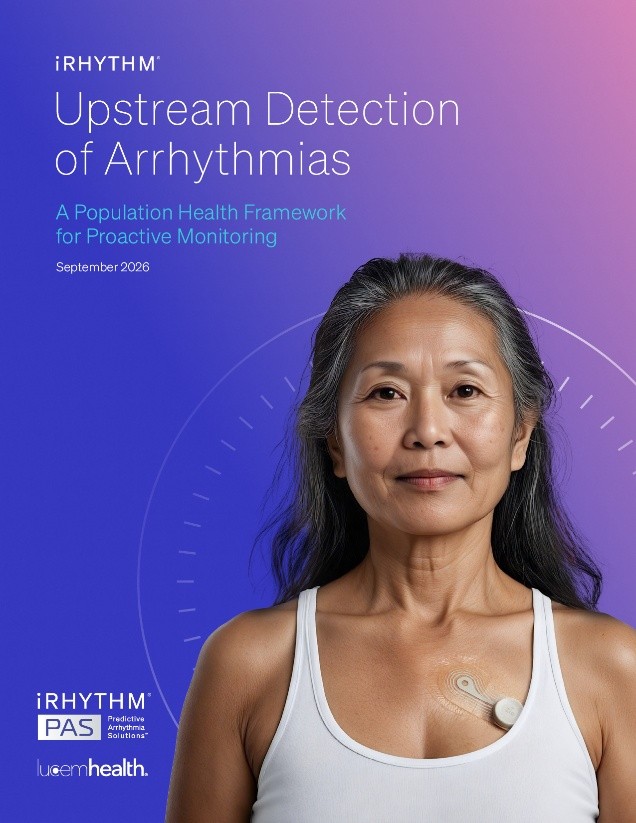
Predictive Arrhythmia Solutions™ (PAS)*, is an iRhythm Technologies solution designed to help organizations make patient data more actionable. It supports healthcare organizations in operationalizing workflows to prioritize patients who may be appropriate candidates for earlier cardiac monitoring with Zio® cardiac monitoring services.
PAS may be implemented using a range of approaches, from manual methods to AI-enabled prioritization using Lucem Health’s Reveal. The goal is to help care teams move from reactive detection to a proactive clinical prioritization strategy.
Proactive Arrhythmia Detection in Practice at Desert Oasis Healthcare
Desert Oasis Healthcare (DOHC) is a healthcare organization that works across a network of providers to coordinate care for an attributed population with complex cardiovascular and metabolic needs. Its decision to pursue predictive candidate identification for cardiac monitoring began with a pattern leadership saw in its own population: arrhythmias were often diagnosed in hospital settings rather than being identified earlier in the home or clinic.
“We noticed that first diagnoses of arrhythmias were happening at the hospital,” says Tom Brazeal, PharmD, APh, BCACP, Associate Director, Technology and Process, Population Health and Prescription Management at Desert Oasis Healthcare. “Hospitalizations, whether they be staying for several nights in an acute setting or in the ER, cost more, and lead to poorer patient outcomes.”
After selecting the PAS program, DOHC centralized key activities within a small, dedicated group, streamlined the ordering process, and designed patient outreach with close attention to trust and clarity.
Dr. Brazeal explains, “We tried to make it as seamless as possible to reduce the amount of work needed by any of our other providers. Our localized team places the orders, so it isn’t interrupting anyone’s workflow more than necessary.”
The program is anchored to a measurement framework spanning clinical, operational, and financial outcomes, including diagnostic yield, hospitalization trends, and a direct benchmark for reducing hospital-based first diagnoses.
Proactive clinical identification creates opportunities to improve operational efficiency, strengthen patient education, enhance disease management, and reduce the overall cost of care.
What health systems can learn from an upstream approach
As DOHC observed, patients most likely to benefit from earlier arrhythmia detection are already within defined patient populations. Targeted ambulatory monitoring can aid clinicians in determining whether an arrhythmia is present, while structured care pathways can support those findings with appropriate management.
The opportunity now is to connect those capabilities into an operational process that moves arrhythmia detection upstream, aligning predictive candidate prioritization with monitoring and follow-through before an acute event becomes the point of diagnosis.
Read the white paper:
To learn how PAS operationalizes this
framework—including DOHC’s
implementation design, evaluation
approach, and early operational
lessons—read the white paper: AI-Enabled Upstream Detection of Arrhythmias.
*Lucem Health utilizes EHR data to prioritize potential candidates for evaluation for arrhythmia, it does not represent functionalities of any Zio® branded medical device.
Patient identification models and algorithms are not part of the Zio service.
Safety Info: https://app.myzio.com/zio-at-safety and https://app.myzio.com/zio-mon-safety.
iRhythm, Zio, Zio XT, Zio AT, MyZio, and ZioSuite are trademarks of iRhythm Technologies, Inc. © 2026 iRhythm Technologies, Inc. MAT-0035-1
