
To meet rising patient expectations, health systems need modern infrastructure and energy strategies that prioritize resilience, efficiency and sustainability.
Becker’s Healthcare and Schneider Electric recently surveyed 150 healthcare leaders to learn more about their organizations’ energy and infrastructure priorities and how they are choosing partners to achieve them.
The majority of respondents (91%) were from large healthcare organizations, with 9% from academic medical centers.
Energy and infrastructure priorities
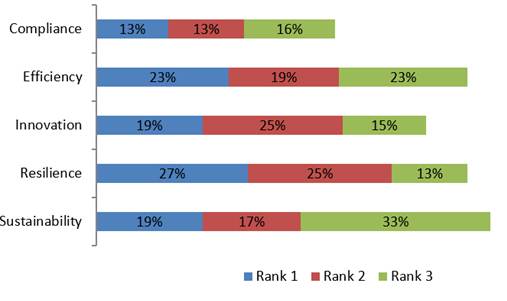
In ranking their most important strategic pillars for energy and infrastructure, survey respondents placed Resilience as their No. 1 priority (27%), followed by Innovation as No. 2 (25%) and Sustainability emerged as No. 3 (33%).
Figure 1. Rank the following strategic pillars in order of importance to your organization
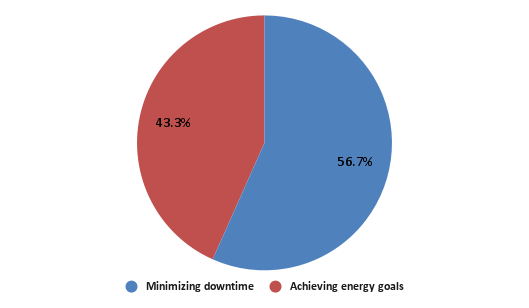
The majority of respondents (57%) selected minimizing downtime as more important than achieving energy goals (43%).
Figure 2. Which of the following is more top of mind for your organization today?
Braheem Santos, U.S. Segment Leader, Healthcare at Schneider Electric, pointed out that hospitals and health systems are increasingly leveraging digitization to help deliver operational resilience, long-term sustainability and decarbonization goals.
“With digitization, you’re able to monitor the quality of your incoming and distributed power, minimize abrupt failure and right-size energy consumption. A 10X return on investment is not out of the ordinary in addition to qualitative gains,” Mr. Santos said.
Why the right energy partner matters
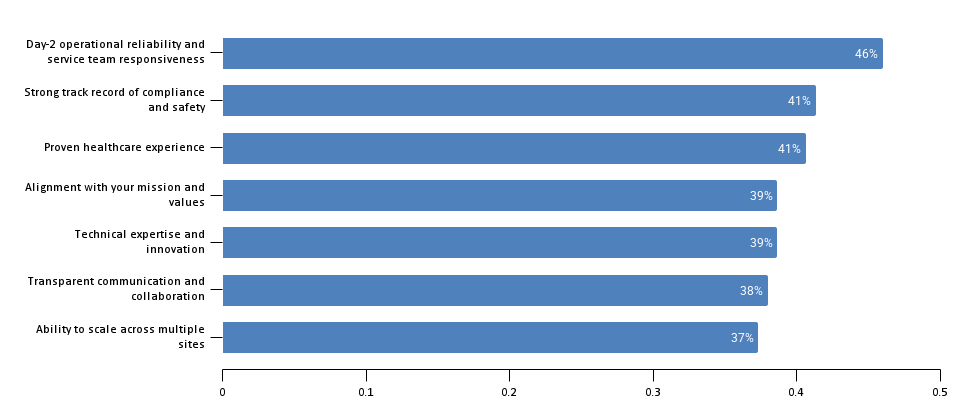
Over 40% of respondents believe partners should have a strong track record in healthcare while also prioritizing the industry’s rigorous compliance requirements. Just as important is a partner’s ability to provide day-2 operational reliability (46%) and service team responsiveness.
“It’s equally important to vet a partner’s team,” Mr. Santos added. “Surround yourself with those that understand the departments and associated care that their work affects; those partners will have your back when something unplanned happens.”
Figure 3. Which qualities are most important when selecting partners to support your system’s energy and infrastructure goals?
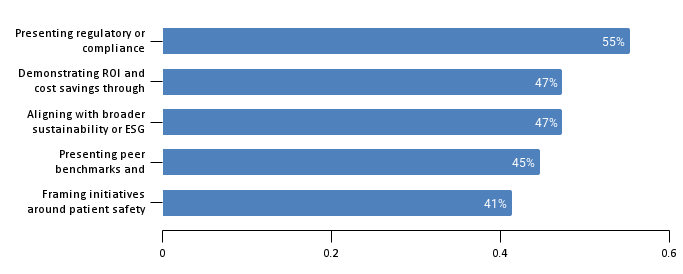
The importance of industry expertise is underlined by the fact that over half of surveyed leaders (55%) prefer partners to showcase their regulatory and compliance capabilities when engaging them in conversations. This preference is closely followed by Demonstrating ROI and cost savings (47%).
“Planning should prioritize safety and speed in that order and be joined by many alternate plans if issues arise along the way. Health system leaders have an opportunity to couple an internal specialist with an external partner to truly drive that roadmap,” Mr. Santos said.
Figure 4. What approaches have you found most welcomed when partners/vendors/solutions providers engage you around energy and infrastructure strategy?
Digital initiatives enable the future
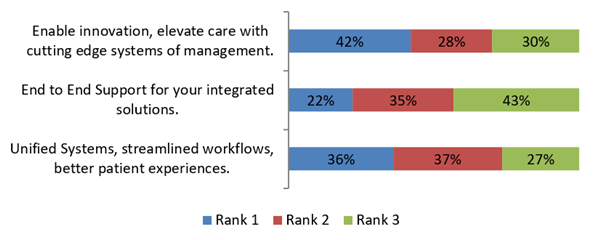
Respondents expressed the highest interest in energy and infrastructure initiatives that enable innovation and elevate care.
Figure 5. Rank the below initiatives in layers of importance for your facilities
Mr. Santos emphasized that digital power management and data integration are becoming central to energy and infrastructure modernization. These tools enable healthcare organizations, in conjunction with partners, to build the next generation of sustainable, resilient healthcare infrastructure.
“These [connected energy management systems and predictive analytics] technologies are no longer fancy gadgets that are nice to have. They are imperative,” Mr. Santos said. “Many health systems are facing reduced budgets and reduced staff. These technologies will allow for right-sized and preemptive maintenance without compromising the care environment.”
