
Last week, well over 10,000 stakeholders crammed into every corner of San Francisco for the 2026 JP Morgan Healthcare Conference, or JPM2026, to get a glimpse of where healthcare is heading.
This is the industry’s equivalent of a high-end mega concert. Next to a Taylor Swift show, it is the toughest ticket in town. And just like her recent “Eras Tour,” the energy of the show is something you have to see to believe.
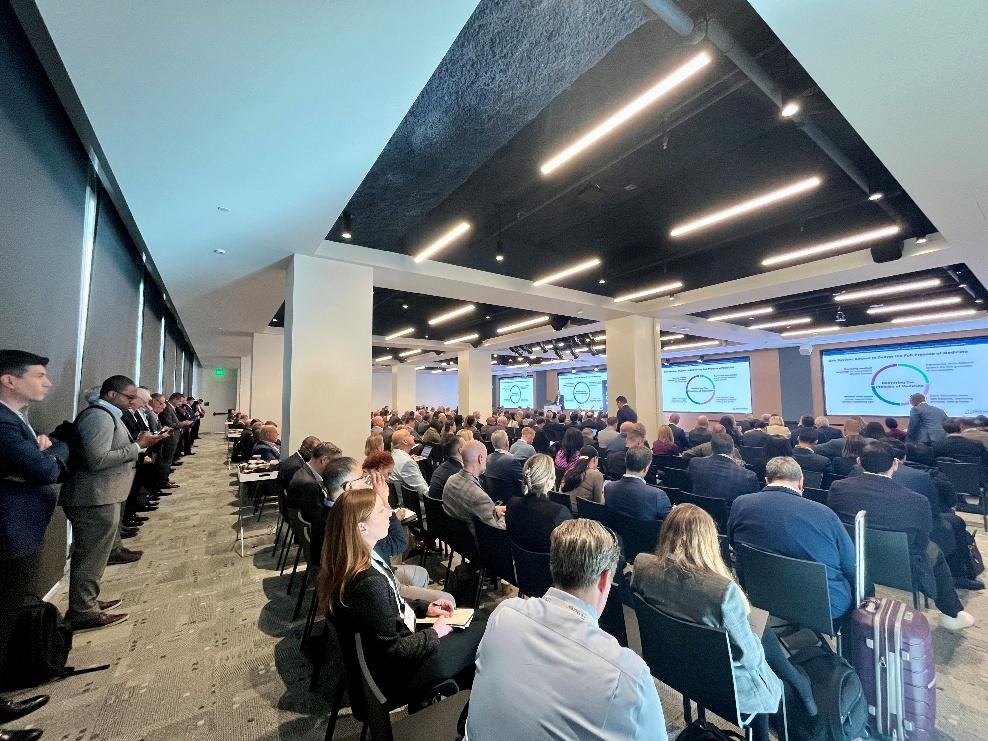
Photo: Dan Michelson.
But here is the twist. While the economic impact of Taylor’s Eras Tour (a/k/a “Swiftonomics”) was seismic, estimated at well over $10 billion, that pales in comparison to the $5 trillion spent on U.S. healthcare every year. Yeah, I know that comparing a single musician to an entire sector of our economy does not seem fair, right? But if you were able to grab a seat in San Francisco for the nonprofit provider track, you would have gotten to see healthcare’s equivalent of more than 20 “Taylor Swifts” take the stage.
First, a little math. Over half of the $5 trillion annual spend on U.S. healthcare flows through healthcare providers, which effectively drives the other half of healthcare spend as well. During the non-profit provider track of JPM2026, CEOs and CFOs from over 20 of the largest and most prominent health systems stepped onto the main stage. For perspective, on average, each represents close to $20 billion, yes billion, of net revenue per organization. Collectively close to $500 billion. But much more importantly, most are the largest employer in the communities that they serve, each with over 65,000 employees on average. And they care for a massive audience of well over 100 million people across the country. (Those numbers would even impress Taylor Swift.)
Given that scale and substance coupled with the 150 of their health system peers also in the audience and these organizations’ global influence, the tunes these leaders were singing on stage will spread. So, wherever you sit in healthcare, it pays to listen and learn.
The healthcare delivery systems that presented at JPM2026 included the following: AdventHealth, Advocate Health, Ascension, Baylor Scott & White Health, ChristianaCare, Cleveland Clinic Health System, CommonSpirit Health, Hackensack Meridian Health, Hartford HealthCare, Henry Ford Health, Inova Health System, Intermountain Health, Johns Hopkins Health System, Mass General Brigham, Mayo Clinic, Northwestern Medicine, Providence, Sentara Health, SSM Health, Sutter Health, Tampa General Hospital and WellSpan Health.
What these organizations are doing, driving and deciding affects healthcare everywhere. That is why I was at JPM2026 last week and why I have sat through each of these presentations for the past 15 years. In that spirit, having been in the front row for this year’s show, I wanted to pass along my playlist of the highlights from JPM2026.
Welcome to the ‘next era’ of healthcare
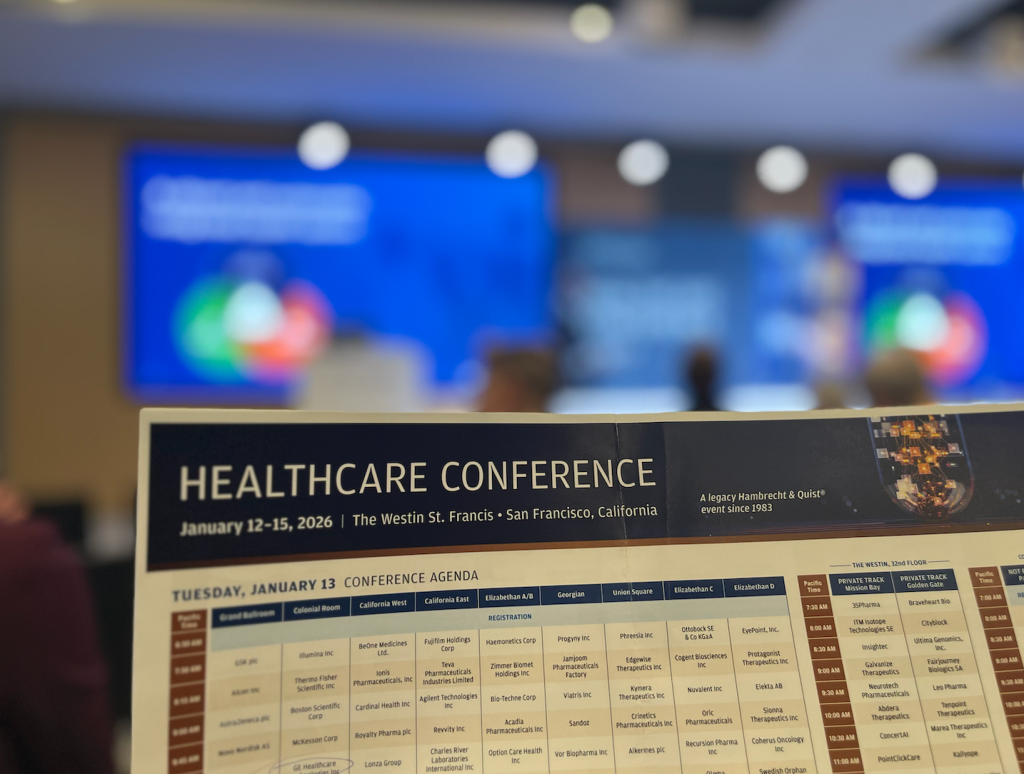
It is clear we have entered a new era in healthcare delivery that is more mature, more scaled, more methodical, more technology driven, more consumer-centric, more distributed and, for the most part, more strategically consistent across every organization.
At the same time, the headwinds they are facing are also similar. Concerns are growing regarding the near-term future of Medicare and Medicaid. Margins are getting tighter. Top line growth is becoming more challenging. Care is moving beyond hospital walls and their core competencies. Workforce strain is stressing the system. Risks and concerns related to safety, quality and governance are rising. And, of course, AI is suddenly emerging, creating both opportunities and threats. While most of these problems are not new, the approaches to solving them have entered a more practical, scaled and systematic stage of maturity.
With that said, taken together, the organizations that presented provided a clear roadmap to where healthcare delivery is heading. So, with that as a prelude, here are the Top Five “Swifty” Inspired Themes from JPM2026 and what they mean for the next era of healthcare:
- Quality and safety are becoming leadership metrics
- Providers are shifting from hospitals to horizontal care
- Operational discipline and scale are becoming the key drivers
- Providers are prioritizing platforms and partnerships
- AI is moving from the future to foundational
Theme No. 1: Quality and Safety are Becoming Leadership Metrics
“Safe & sound.”
(Taylor Swift from the song Safe and Sound)
The golden rule of healthcare is to “first, do no harm.” It is not only the right thing to do but falling short carries significant financial and reputational risk. Quality and safety are no longer side shows or accreditation exercises. At JPM2026, they appeared as enterprise performance indicators — tracked, benchmarked and discussed at the highest levels. Health system leaders talked about safety in very concrete terms: preventable harm. In Hartford HealthCare’s presentation, system leaders highlighted measurable outcomes — including a 67% reduction in surgical site infections and zero HAC penalties — signaling that quality and safety are now tracked and discussed with the same rigor as financial performance.
Workforce investments showed up as enablers of safer care. Virtual nursing, ambient documentation and workflow automation were framed as ways to reduce cognitive overload and improve reliability — not as perks, but as nonnegotiable safety and quality infrastructure.
Common Playlist:
- Establishing board-level accountability with explicit tracking of infection rates, HAC penalties and safety outcomes
- Leveraging and promoting external benchmarks, including CMS Star Ratings and Leapfrog scores
- Deploying scalable technology platforms that deliver defensible, auditable, closed-loop safety infrastructure across facilities and care settings
- Applying AI proactively to identify risk early and prevent harm
Key Takeaway: When quality defines trust, leaders need systems that prove performance — because safety is not just a clinical responsibility anymore; it belongs with the executive team. Patient safety will be designed upstream. It will depend on providing clinicians with the tools, capacity and consistency they need to keep patients safe and sound.
Theme No. 2: Providers are Shifting from Hospitals to Horizontal Care
“We are never, ever, ever getting back together.”
(Taylor Swift from the song We Are Never, Ever Getting Back Together)
At JPM2026, health systems were clear: growth is no longer anchored to the hospital. Leaders emphasized ambulatory, ASC, primary care, home and virtual care as the future of their organizations, many with double digit growth across these areas.
This shift is driven by cost pressure, access expectations, capital efficiency and workforce realities — and it comes with a tradeoff. As care moves beyond the hospital, complexity increases. More sites, more caregivers and more partners make consistency harder to achieve and sustain. After many years of health systems acquiring ambulatory practices, we have seen hospitals extend their front door. Now they need to be more methodical and strategic about opening it. Health systems will continue to become far more deliberate and strategic in how they manage access and care coordination along with safety and quality across an increasingly distributed care environment.
Common Playlist:
- Reducing acute care utilization and rationalizing the hospital footprint
- Supporting physician practices with marketing automation to drive patient growth
- Expanding large-scale ambulatory facilities and primary care platforms
- Forming ASC partnerships (e.g., Ascension’s pending AmSurg acquisition)
Key Takeaway: Health systems are breaking up with and never, ever, ever going backto their hospital-centric approach of the past; they are dramatically increasing site count, caregiver types and third-party partners. Success now depends on whether they can more effectively open their front door, meet their patients where they are, and scale care horizontally without scaling risk.
Theme No. 3: Operational Discipline and Scale are Becoming the Key Drivers
“[We] learned it the hard way.”
(Taylor Swift from the song Foolish One)
At JPM2026, few leaders spoke directly about margin pressure, but nearly all emphasized operational discipline. Many cited cost reductions of over $300 million. Health systems including WellSpan Health and Henry Ford Health spoke openly about sustained cost reduction, agency reduction and operating discipline as permanent requirements for performance, not one-time recovery efforts. A heightened focus on operating model rigor, workforce productivity and capital prioritization emerged as consistent themes.
What has changed is how failure is viewed. Breakdowns in safety, compliance or operations are increasingly seen as preventable, not inevitable – raising the bar for accountability across the system. Leaders are no longer willing or able to attribute misses to complexity or local variation; instead, they are raising expectations around standardization, governance and accountability, recognizing that disciplined operations are the only way to scale reliably.
Common Playlist:
- Executing large-scale, methodical cost reduction initiatives with board visibility and defined KPIs
- Stabilizing the workforce post-pandemic with significant reductions in agency labor
- Favoring standardization over customization to support scale
- Improving data connectivity, integrity and enterprise operational insight
- Moving from operational “strategy” to durable, implemented operating models
Key Takeaway: The performance and sustainability of a scaled organization is dependent on daily operational rigor — clinically, operationally and financially. The more advanced health systems have learned it the hard way and are now taking those lessons of the past and baking them into operating machines that are more cohesive and consistent.
Theme No. 4: Providers are prioritizing platforms and partnerships
“You belong with me.”
(Taylor Swift from the song You Belong with Me)
Another shift emerged at JPM2026: simplification. Health systems signaled a clear preference for fewer vendors and deeper partnerships. Several systems emphasized simplification through platform consolidation, with CommonSpirit Health noting a deliberate reduction in core systems from 19 to 11 as part of a broader push toward systemwide governance and fewer, deeper technology partnerships. Point solutions are giving way to technology platforms and partners that can scale across sites, settings and risk profiles. This evolution reflects both margin pressure and operational reality.
The shift to a single, unified, front-end platform has already happened with electronic health records, even among the largest multi-state health systems. A similar consolidation happened in the back office with financial systems spanning ERP, revenue cycle and financial planning. Attention has now turned to operations — the “messy middle.’ Leaders are prioritizing partners who deeply understand healthcare operations, risk and regulation, and who integrate directly into the operating model rather than sitting alongside it. The preference is no longer for transactional technology purchases, but for long-term partnerships that reduce complexity, reinforce discipline and innovate with the system over time.
Common Playlist:
- Rationalizing applications and technology partners
- Shifting from point solutions to enterprise platforms
- Increasing automation across healthcare operations, risk and regulatory workflows
- Moving toward long-term partners that scale with the system
Key Takeaway: Health systems are facing a level of operational complexity, safety risk and financial pressure that fragmented tools and point solutions can no longer manage. In response, health systems have sent a message that they are in this together with their partners. They are consolidating around platform-based relationships that standardize operations, strengthen governance, and scale care safely and sustainably.
Theme No. 5: AI is Moving From Future to Foundational
“Are we out of the woods yet?”
(Taylor Swift from the song Out of the Woods)
Last year, artificial intelligence was framed as a future promise. At JPM2026, AI was positioned as foundational infrastructure. Health systems shared concrete examples of AI improving detection, access and efficiency — often at meaningful scale. Mayo Clinic disclosed more than 150 AI use cases in production. Tampa General shared real-world results from AI-enabled sepsis detection and access optimization deployed across their system. The emphasis has shifted to making AI practical, embedded and outcome-driven. And there was a consistent preference to leverage vendors’ solutions versus creating homegrown solutions; systems are looking for partners.
Looking back at the two decades it took to mainstream EHRs, the pace of AI adoption is striking by comparison. Many of the organizations at JPM2026 had hundreds of AI projects in motion focused on specific clinical or operational use cases. As AI moves deeper into core workflows, however, leaders are now confronting harder questions around accountability, reliability and unintended consequences. While these questions will not be a barrier, they will certainly be speed bumps as we move forward into the future.
Common Playlist:
- Prioritizing AI to core workflows with clear clinical and operational impact
- Deploying AI to reduce sepsis mortality
- Using ambient documentation to support physicians and nurses
- Applying agentic AI to improve access and scheduling
- Leveraging predictive models to prevent hospital-acquired infections
Key Takeaway: AI is helping health systems move faster, but leaders were clear: we are not out of the woods yet. As AI becomes embedded in clinical and operational workflows, new categories of risk, accountability and governance are emerging alongside real momentum and belief in its potential. The work now is making sure speed is matched with structure as systems move forward.
Those are just five of the key themes that were shared at JPM2026. Time will tell how the next era of healthcare delivery will evolve. What is clear is that it will be shaped by those willing to lead through change rather than wait for certainty.
All leaders should ask themselves one incredibly important question: “What would Taylor do?”
Healthcare’s “Next Era” is All About Leadership
So, not your typical summary of a healthcare investor conference, right? But I did that for a reason.
I think we can all learn a lot from Taylor’s leadership, especially in a time of massive change. I genuinely believe that she has proven to be one of the best CEOs in the world. Think about it. Who has done a better job in delivering in so many of the essential building blocks of a world-class company? She has absolutely nailed so many of the foundational deliverables that any leader would love to have associated with their track record:
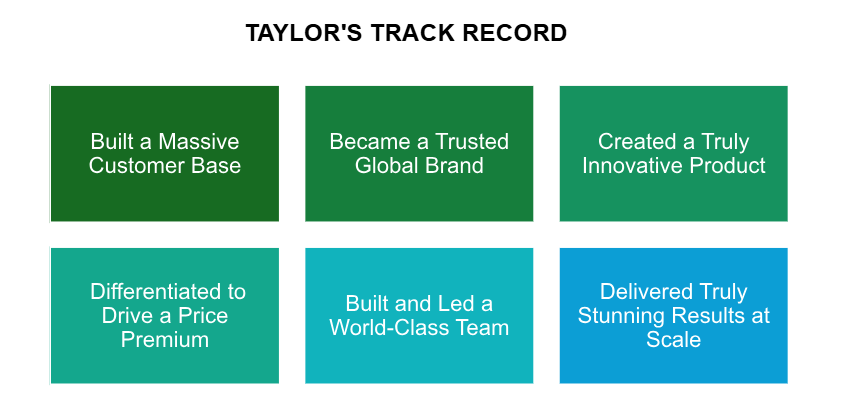
That is quite a list, right? I have never seen Taylor Swift in concert, but seeing her extraordinary talent, both as an artist and as a leader, has turned me into a “Swifty.” She thinks of herself as an English teacher, but she also is giving everyone a free Ivy League level MBA in how to build a high-performing business in a time of massive market transformation.
Over the last 25 years, the business model for the music industry has flipped — from touring to selling records and CDs to streaming that builds the audience and live touring that monetizes it. Healthcare has flipped too — from hospital-centric delivery to a distributed, technology-enabled model. Like the music industry, this is not a temporary phase or cyclical correction. It is a brand-new era.
Building Blocks in the Different ‘Eras’ of Healthcare Delivery
| Some of the Key Building Blocks | The Last Era 2000 | The Current Era 2025 | The Next Era 2050 |
| Business Model | Completely Volume-Driven | Model in Transition | Leaders Will Emerge. Others Will Follow. |
| Care Delivery Footprint | Hospital-Centric | Trending Towards Ambulatory, ASC, Virtual, Home | |
| Hospital Consolidation | Limited | Extensive | |
| Physician Practice Ownership | Independent Practices That Are Primarily Stand-Alone | Owned-Entities Part of Health Systems/Large Groups | |
| Operations | Immature and Primarily Manual | Maturing with Some Processes Automated | |
| Process Discipline | Fragmented, Bespoke Workflows | Standardization, Cost Discipline, Operational Rigor | |
| Clinical Record | No Automation: Paper-Based System | EHRs Now Ubiquitous: Automation is Standard | |
| Analytics | Non-Existent: Limited Access to Data | Primarily Reporting: Data Rich, Limited Insights | |
| Partnerships | Point Solutions: Transaction Driven Relationships | Platforms: Partnership-Driven | |
| Artificial Intelligence | Non-Existent | Just Getting Started |
Source: Healthcare Delivery Era-Based Shifts compiled by RLDatix
This is just a small sample of some of the changes in motion. The most important takeaway for leadership teams is to understand that shift happens and we are entering a very different era now, where the same tools and tactics will not work. They will need to be learning organizations with the ability to adjust to the market as the speed of change accelerates.
The leaders that succeed will be the ones that can grow, transform and partner without losing control of safety, quality, and, most importantly, the trust of their patients and providers along the way. In that spirit, there is so much we can learn from each other in venues like the 2026 JPM Healthcare Conference. And there is a lot we can learn from Taylor, too.
About the Author
Dan Michelson is the CEO of RLDatix, a global healthcare software and services provider with a mission to raise the standard of care everywhere. The company’s patient, workforce and data solutions are used by over 10,000 health and care organizations across the world.
Mr. Michelson has covered JPM for years. His recaps and thematic analyses from prior conferences are available here:
- The #1 thing you need to know from the 2017 JP Morgan Healthcare Conference: Follow the money – Becker’s Hospital Review
- Top 12 takeaways from the 2018 JP Morgan Healthcare Conference — while the destination is uncertain, the direction is clear – Becker’s Hospital Review
- The #1 takeaway from the 2019 JP Morgan Healthcare Conference: It’s the platform, stupid – Becker’s Hospital Review
- The top 10 questions from the 2020 J.P. Morgan Healthcare Conference that every CEO must answer – Becker’s Hospital Review
- The No. 1 lesson from the 2021 JP Morgan Healthcare Conference: Healthcare is ‘too vital to fail’ – Becker’s Hospital Review
- The greatest comeback in the history of health care | Fortune
- Covid-19 is no longer the biggest issue facing hospitals. Staffing Is | STAT
