
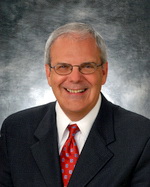
 Nick Jacobs, FACHE, has more than 20 years of experience in hospital management, but it wasn’t always that way. Mr. Jacobs, who is now a consultant with SunStone Management Resources, was CEO of Windber (Pa.) Medical Center from Feb. 1997 until December 31, 2008. In this time, he helped open a $10 million wellness facility, a world class breast center and co-founded the Windber Research Institute, which focuses on genomic research for breast cancer and other diseases. Under his leadership, Windber became one of the premiere sites for Dean Ornish’s Program for Reversing Heart Disease. The hospital saw a $2.3 million net revenue, the lowest readmission rate of all 18 hospitals in the area, an infection rate below 1 percent and — even with a hospice program — the hospital had the lowest mortality rate in the area.
These accomplishments in the healthcare industry might make the next piece of information a surprise: Mr. Jacobs earned his first masters degree in Music Education/Trumpet.
A changed healthcare landscape has prompted discussions over changes in leadership skills. Hospital administrators without healthcare background may seem like a paradox, but Mr. Jacobs proves that ingenuity and a well-rounded perspective are gaining a place in the hospital industry.
Earning credibility
Mr. Jacobs certainly wasn’t lacking healthcare experience when he assumed his role as Windber CEO — but healthcare was not the focus for the early part of his career. He began as a professional trumpet player and teacher, moving on to hold leadership positions with tourism bureaus and arts centers along the way. Before moving into healthcare, Mr. Jacobs earned his master’s degree in public management/health systems management from Carnegie Mellon University and a certification in health systems management from Harvard University — degrees he earned when he was in his 40s. “I realized, to break into a profession at age 40 and to earn credibility, you need all the tickets you can get your hands on,” says Mr. Jacobs.
A place people would love
Mr. Jacobs will be the first to tell you he hates the smell of a hospital. When he became CEO of Windber at age 49, he went on a “passionate” mission to change the way the hospital delivers healthcare. Mr. Jacobs recalls a visit he once paid to Windber’s hospice, where friends and family visited patients 24-hours a day and people sang in the halls. He asked himself why people had to be dying to have that type of hospital experience. Under his leadership, Windber became a Planetree facility, meaning it focuses holistically on the patient experience. “Basically, my dream was that I would turn this into a place that people wouldn’t like — people would love,” Mr. Jacobs says.
The mission started with small steps like installing cinnamon-scented air fresheners in the waiting rooms. He then began to unleash larger changes, like randomly offered trips for employees and their families to Disney World. He used the trips as a tool to empower middle management employees, telling them to return from Disney and teach everyone what they had learned. OB/GYN suites were redesigned to have double beds for couples. The hospital launched 24-hour visiting as well as holistic, alternative therapies such as those with art, pets and music. A hotel manager was brought in to increase the hospital’s amenities, such as mobile food carts that would be wheeled from floor to floor, allowing patients, families and employees to select what they wanted to eat for each meal.
Bullies not allowed
Of course, not everything went smoothly. “I had some rough times here for a while,” says Mr. Jacobs. “Medical executives would call me in if physicians had anger management issues.” He mentioned that when physicians would have outbursts, he would tell them they could leave immediately without any repercussions. “Or, ‘if you ever do it again, we’ll report you to the medical executive committee,'” says Mr. Jacobs. The hospital lost approximately 17 physicians with this zero-tolerance approach to disruptive behavior, but saw improved quality. “The single most important thing to improve quality? Eliminate bullying,” says Mr. Jacobs. “People were mean, nasty and condescending. It created a bad work environment.”
Training fleas for the circus
Mr. Jacobs says he’s noticed a common thread in how healthcare leaders are trained, and suggests medical schools and administrative training programs emphasize responsible creativity more. “Do you know how you train fleas for a flea circus? You put them in a box, they hit their heads when they jump to get out, and then you throw the lid away. That’s how we train,” Mr. Jacobs says, referring to healthcare management and inside-of-the-box thinking. “I did a lot of things that were considered risky by some people, but I had protocols, rules and regulations that allowed it to not be deemed ‘crazy,'” he says. “There was a real depth to the degree we questioned the credibility.”
Mr. Jacobs’ “risky” ideas actually turned out to be quite beneficial. He says the hospital was profitable 10 out of 11 years and saw an average profit margin of 23 percent. During his final year there, patient satisfaction scores were in the 97+ percent range. Roving drum circles, pet therapy dogs, 24 hour visiting, reiki, acupuncture, massage and labyrinths were all new to the environment and somewhat risky in the conservative world of hospital management, but removing the bullies in both the physician and employee ranks was by far the most risky thing that Mr. Jacobs says he did.
During his tenure, research at the hospital grew: Windber now has the largest and most highly annotated collection of donated breast cancer tissue (more than 30,000 samples) ever amassed in the world and the National Cancer Institute is using many of these samples to map the human breast cancer genome. The hospital’s below-1 percent infection rates, readmission and restraint rates were also associated with cost-savings.
Mr. Jacobs still hates the smell of hospitals, and urges healthcare leaders from finance and clinical realms to simply remember how people are treated. “Here’s this trumpet-trained CEO who decided it doesn’t have to be the way it is,” says Mr. Jacobs.
Related Articles on Hospital Leadership:
7 Traits of a Great Hospital CEO
4 Strategies to Optimize Leadership in Integrated Care
6 Issues Facing Hospital CEOs in 2011 and Beyond
At Becker's 4th Annual CEO + CFO Roundtable, taking place November 2–5 in Chicago, more than 1,500 hospital and health system executives tackle decisions that determine whether organizations thrive or merely survive: protecting margins under cost pressure, choosing where to grow, renegotiating payer relationships, stabilizing the workforce and proving real ROI on technology. This is where leaders work through them together, face-to-face. Apply for complimentary registration now.
